When Meera tripped on a flight of stairs and felt her right leg snap, she feared life would never be the same. A complex tibia fracture has that effect—it shakes your confidence as much as it hurts your body. But what surprised her wasn’t just how quickly she was back on her feet. It was the realization that her surgeon had tools and techniques that didn’t exist even a decade ago.
The field of tibia fracture management has moved far beyond plaster casts and standard nails. Today, innovations are shifting the focus from just “healing the break” to helping patients regain normal movement, strength, and confidence faster than ever. Here are five such game-changers.
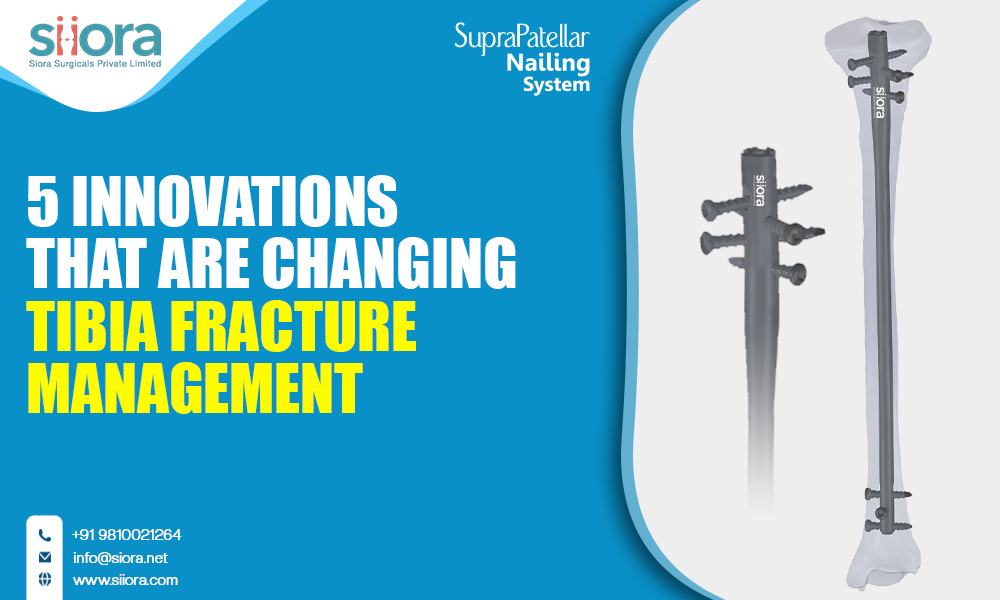
1. Suprapatellar Tibia Nailing
For years, surgeons inserted tibial nails below the kneecap while bending the knee sharply. It worked, but the awkward angle often made alignment difficult—and patients sometimes carried nagging knee pain long after the bone healed.
The suprapatellar nail approach solved much of that. By entering above the kneecap with the leg held straight, surgeons can align bone fragments more accurately. Patients, in turn, walk away with less knee soreness and a shorter road to physiotherapy. What looks like a small tweak in entry point has become a major step forward in real-world outcomes.
2. Multifix Tibia Nail Systems
One of the most talked-about advancements is the Multifix tibia nail. Unlike older nails where screw holes left little flexibility, this system offers multiple screw angles and configurations. In plain terms: it adapts to the fracture instead of forcing the fracture to adapt to it.
Why does this matter? Because not all fractures look the same. When the bone shatters into multiple pieces or involves tricky angles, a standard nail may leave gaps in stability. Multifix systems let surgeons customize fixation, reduce the risk of malalignment, and give patients a stronger, straighter leg once healing is done.
3. Locking Plate Technology
Plates aren’t new—but the way they work has changed dramatically. Conventional plates depend on how tightly screws grip into the bone. That’s fine for younger patients, but in osteoporotic bone, those screws can loosen.
Locking plates changed the rules. Here, screws lock firmly into the plate itself, creating a rigid framework even if the bone is weak. They’re especially helpful near joints where alignment must be near perfect. For patients, this means fewer chances of deformity and a much smoother recovery process.
4. Minimally Invasive Fixation
Long scars, heavy swelling, months of pain—these used to be normal with major fracture surgeries. Thankfully, not anymore. With minimally invasive approaches, surgeons now insert nails or plates through small incisions under X-ray guidance.
Less muscle cutting means less blood loss, fewer infections, and faster healing. Patients notice the difference not just in hospital stay but also years later, when scar tissue is minimal and joint mobility feels more natural.
5. Advanced Imaging and Navigation
Ask any surgeon: precision is everything in orthopedics. Modern imaging tools and computer-guided systems now allow doctors to see alignment and implant placement in real time. This lowers guesswork, shortens procedure time, and reduces repeat operations.
For patients, these invisible upgrades translate into safer surgery and healthier long-term outcomes.
Final Word
The truth is, tibia fracture care is no longer just about “fixing bones.” It’s about restoring lives. Whether it’s suprapatellar entry, multifix nails, or locking plates, each innovation moves patients a step closer to walking, working, or even running like they once did.
As Meera found out, the real breakthrough isn’t just the technology—it’s the combination of surgical skill, smart engineering, and a patient-centered mindset. And with these advances, more people with tibia fractures are learning that recovery can be faster, smoother, and far less daunting than they ever imagined.
Siora Surgicals Pvt. Ltd. is a renowned orthopedic manufacturer in India, with a presence in over 50 countries. Siora also participates in several international medical conferences; currently, it is preparing to exhibit at WHX Dubai 2026, a much-awaited annual healthcare exhibition.
 Siora Surgicals Pvt. Ltd.